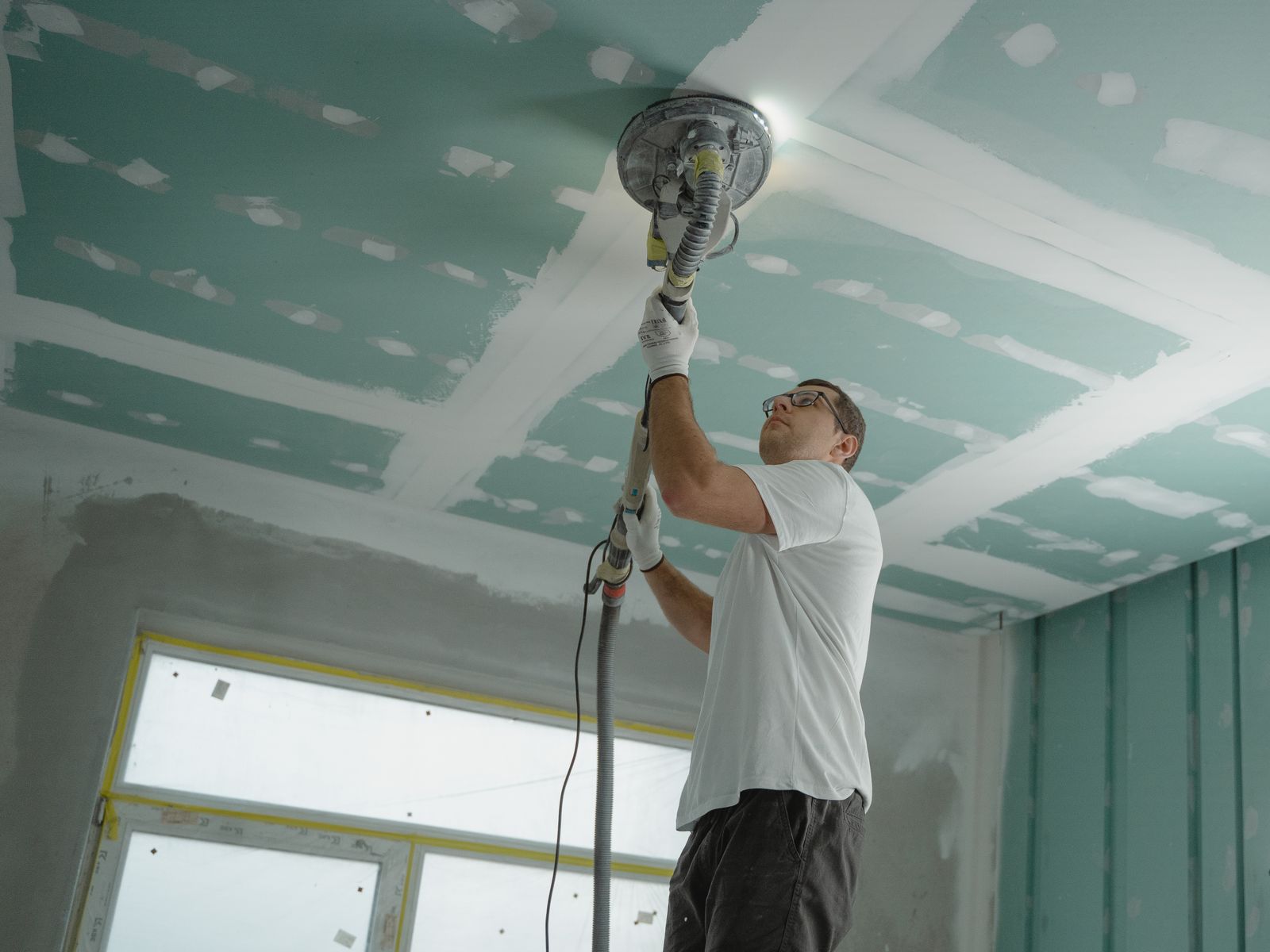
If Your Albuquerque Home Went Up Between 1960 and 1990, Look Up
Albuquerque grew fast after the war, and the ceilings tell the story. Tract builders like Dale Bellamah and Mossman-Gladden carpeted the Northeast Heights with brick ranch homes from the late 1950s through the early 1980s — Altamonte, Stardust Skies, Bear Canyon, Hoffmantown — while across the river, AMREP sold Rio Rancho Estates lots to half the Midwest. Nearly all of it got the same finishing touch: sprayed-on acoustic "popcorn" texture, cheap and quick, hiding imperfect drywall taping in one pass.
Decades later, that texture is the single most dating feature in an otherwise solid ABQ home. It grays out rooms, sheds flakes under every wobbling ceiling fan, soaks up stains from swamp-cooler drips and flat-roof leaks, and makes buyers ask the dreaded question: has that stuff been tested? Removing it — carefully, testing first — is one of the least expensive transformations a home this age can get. ABQ Popcorn Ceiling Removal connects you with a licensed, insured local pro who handles the whole arc: testing, containment, scraping, refinishing, paint. Quotes are always free.
Four Reasons Albuquerque Ceilings Are Ready for This
New Mexico light deserves better
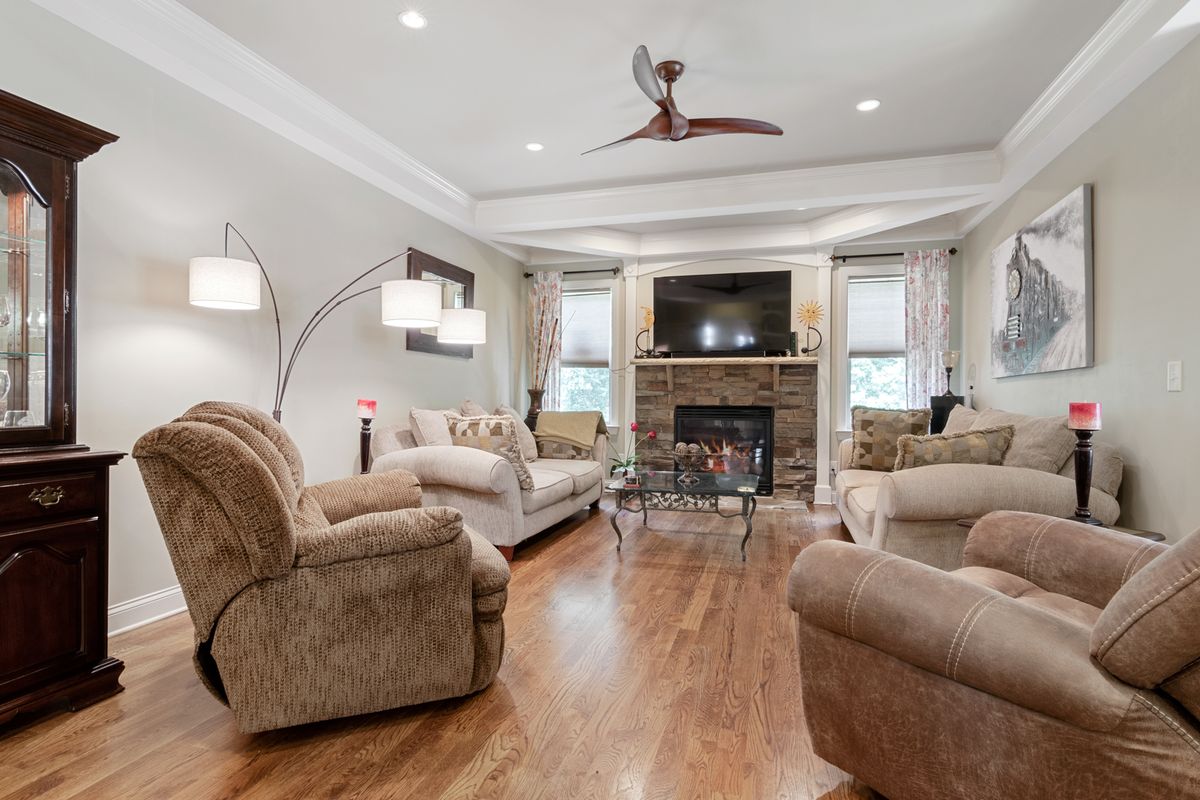
We get over 300 days of sun a year, and popcorn texture wastes it — the bumps throw thousands of tiny shadows that dim the whole room. A flat, smooth ceiling bounces that famous high-desert light around, and an 8-foot ranch ceiling suddenly reads taller.
It's a dust and allergen shelf
Spring winds off the West Mesa push fine dust into every ABQ house, and cottonwood fluff from the bosque follows in June. Popcorn texture catches all of it and can't be wiped clean without crumbling. Removal ends the overhead dust collection for good.
Water stains never really hide
Flat roofs with clogged canales, monsoon ponding, and roof-mounted swamp coolers give Albuquerque more ceiling stains than most cities. Stained popcorn can't be spot-painted convincingly — but a scraped, sealed, refinished ceiling erases the evidence.
Buyers notice in the first minute
Ask any local agent: listings in the Heights, Nob Hill, or Rio Rancho photograph dramatically better with smooth ceilings, and inspections go smoother without an "era-appropriate acoustic texture" line item raising asbestos questions during negotiations.
How the Removal Process Works
Whether it's one water-stained bedroom near Eldorado High or every ceiling in a Bellamah ranch off San Mateo, the sequence is the same — and it starts with a test, not a scraper.
Free quote
Call or use the form below. Share your ZIP code, rough ceiling square footage, and the home's age, and you'll get a straightforward price with no obligation and no sales theater.
Asbestos test on pre-1990s texture
Small samples go to an accredited lab before any scraping starts. It's the only way to know what's up there — age and appearance prove nothing. See how testing works in Albuquerque, including who regulates what on each side of the county line.
Seal the room
Floors, walls, and fixtures get wrapped in plastic sheeting, vents are masked so nothing enters the ductwork, and the work zone is isolated from the rest of the house. Saltillo tile, wood floors, and baseboards stay spotless.
Wet-scrape the texture
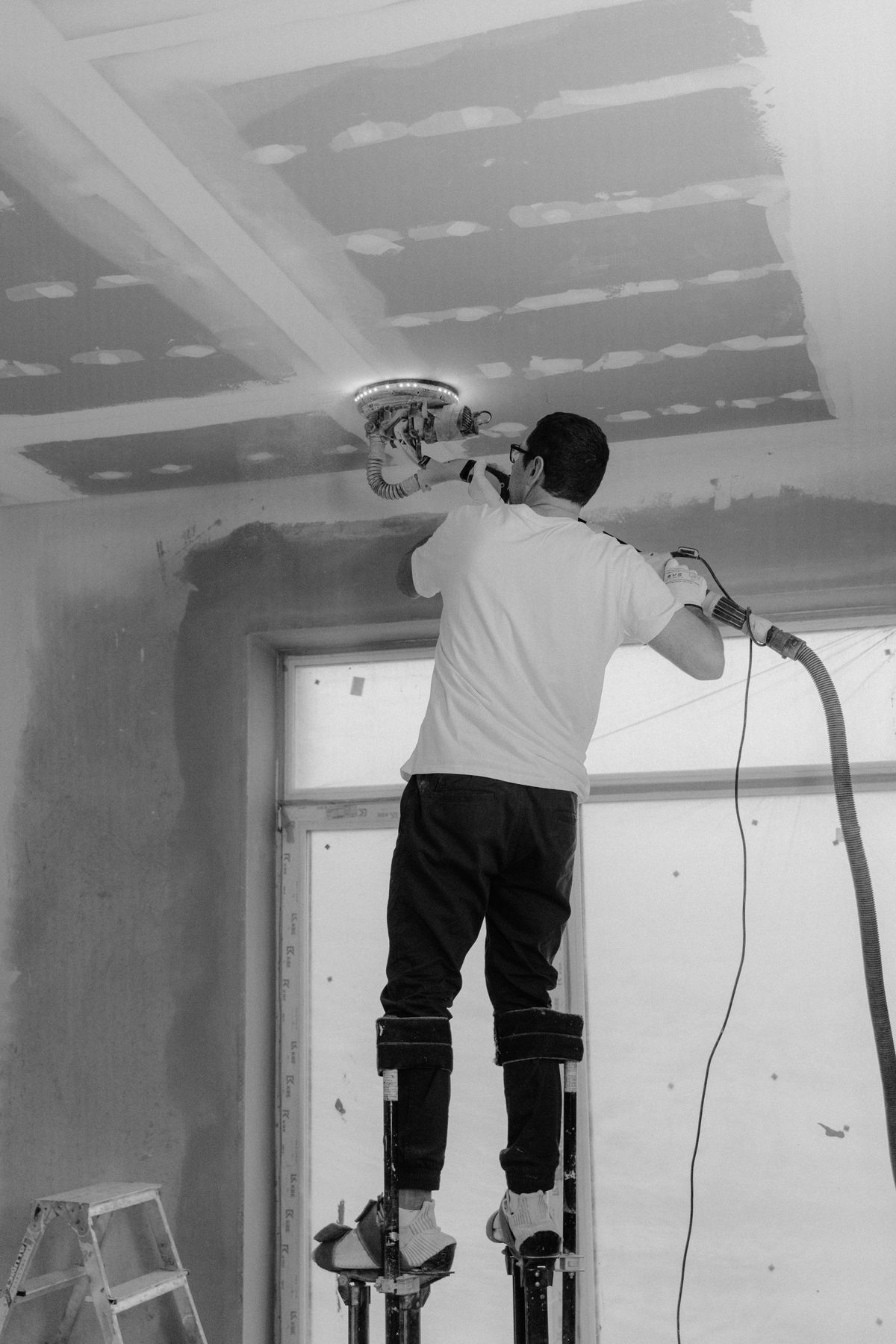
The popcorn is misted, given time to soften, and scraped away in ribbons with wide taping knives. Keeping it damp keeps dust out of the air. Ceilings that were painted over — very common after 40 years of ABQ repaints — resist the water and take extra passes, which is factored into your quote up front.
Repair, skim, and refinish
Nail pops, cracks, and old cooler-line patches get fixed, then the ceiling is skim-coated and sanded. You choose the final look: dead-smooth, knockdown, or orange peel. Compare the texture options.
Prime, paint, and haul away
Stain-blocking primer locks down any old water marks, flat ceiling white goes on, the plastic comes down, and the debris leaves with the crew. Most single rooms finish in a day or two; whole homes usually run three to five, helped along by our desert-dry cure times.
What Popcorn Ceiling Removal Costs in Albuquerque
For a ceiling that tests asbestos-negative and hasn't been painted over, straight scraping in the Albuquerque metro generally runs about $1 to $3.50 per square foot, with skim coating, texture, and paint building from there. A single 12×12 bedroom often lands in the high hundreds all-in; taking a typical 1,500–1,800 square foot Heights ranch from popcorn to painted usually reaches the low-to-mid thousands. What moves the number most:
- The lab result. A negative test keeps things routine. A positive one shifts the project to licensed abatement or encapsulation at a different price class entirely.
- Paint over the texture. Sealed popcorn won't absorb water, so removal slows down and costs more per foot.
- Heights and vaults. Two-story foyers in La Cueva-era homes and vaulted great rooms need staging and add labor.
- Your chosen finish. A glass-smooth level 5 ceiling takes more coats and sanding than knockdown.
More Than Scraping: Complete Ceiling Care
Most projects bundle a little of everything. The same pro can take on ceiling and drywall repair — swamp-cooler stains, cracks radiating from ceiling corners, sagging seams, and the patched hole where a cooler line used to run — plus full ceiling painting so the finished surface actually matches the room it crowns. Already have smooth ceilings that just look tired? Repair, retexture, or repaint alone is a perfectly good project, and the quote still costs nothing.
Request Your Free Quote
Fill in the basics and a licensed, insured Albuquerque ceiling professional will get back to you fast with real numbers and honest advice — including whether your ceiling should see a lab before it sees a scraper.
Rather talk to a person? Call and describe what's overhead. Two minutes is usually plenty.
Estimating square footage: multiply each room's length by width and add them up. A 12×12 room is 144 sq ft, and most single-story ABQ ranches total 1,200–1,800 sq ft of ceiling.
Albuquerque Popcorn Ceiling Questions, Answered
Is there really asbestos in Albuquerque popcorn ceilings?
In some, yes. Spray-applied acoustic texture commonly contained asbestos into the 1980s — installers could legally use up existing inventory after production ended, so even a mid-80s ceiling can test positive. Looks tell you nothing; an inexpensive lab test tells you everything. Sample any ABQ home built before the early 1990s before scraping. Here's exactly how that works.
Will the removal trash my house?
Not when it's contained properly. Wet popcorn comes down as heavy, sticky sludge — which is exactly why the room gets sealed in plastic first, vents get masked, and floors get double protection. The mess stays inside the containment and leaves in bags.
How many days does a whole-house project take?
Plan on one to two days for a single room and roughly three to five for a full 1,400–1,800 square foot home: a day of setup and scraping, one or two for skim coats (Albuquerque's low humidity is a genuine schedule advantage), and a final day for texture and paint.
What about the water stains on my ceiling?
Stains from a swamp cooler, a clogged canale, or a monsoon leak get addressed during refinishing: the source has to be fixed first, then the damaged drywall is repaired or replaced, and a stain-blocking primer keeps the old mark from bleeding through the new paint. It disappears for real, not just until next August. More on water-damage repair.
Can the popcorn be covered instead of scraped?
Sometimes that's the smarter play. Skim-coating over sound texture, or hanging new drywall beneath it, avoids disturbing material entirely — often the route when texture tests positive or carries many paint layers. Your quote prices both paths.
Do I have to repaint after removal?
Yes, and you want to — freshly skimmed drywall must be primed and painted, and it's the step that makes the whole project look intentional. Flat ultra-white is the classic choice for bouncing New Mexico light around; the ceiling painting page covers sheens and colors that work here.
Serving the Albuquerque Metro, One Ceiling at a Time
From the Sandia foothills to the West Mesa and everything around the Big I, the partner pro covers the neighborhoods where acoustic ceilings actually live: the Northeast Heights, Rio Rancho, Nob Hill and the UNM area, plus the North Valley, South Valley, Four Hills, Paradise Hills, Taylor Ranch, and Corrales. If the Sandias turn watermelon-pink outside your window at sunset, you're in the service area.
Ready to Lose the Popcorn?
Free quotes, lab-tested safety, sealed containment, and a licensed, insured Albuquerque ceiling professional on the other end of the line.